
One of the most frequent problems that the owners of betta are facing is the problems with the swim bladder. To a large extent, your betta may be because of the swim bladder disease when it just starts floating strangely, sinking or having difficulty in doing so. Though frightening, the condition can normally be treated once diagnosed at an early stage and handled in the right manner.
This article presents us with the definition of the swim bladder disease of the bettas, the symptoms, the causes and also going to provide ways of bringing back your fish to life.
What Is Swim Bladder Disease in Bettas?
Swim bladder disease is not the disease but a complex of symptoms which appear when the swim bladder of your betta is not doing its job in the best way possible. A swim bladder is an internal organ that contains gas and it is through this that the fish is able to regulate its level of buoyancy in order to remain at its preferred depth without having to expend a lot of energy. This organ enables the bettas to have balanced swimming and normal posture in the tank.
Since there is no single cause of swim bladder disease betta symptoms, it is noteworthy to discover the entire picture in order to treat the symptoms and not only the causes which caused the disease.
Common Symptoms of Swim Bladder Disease Betta
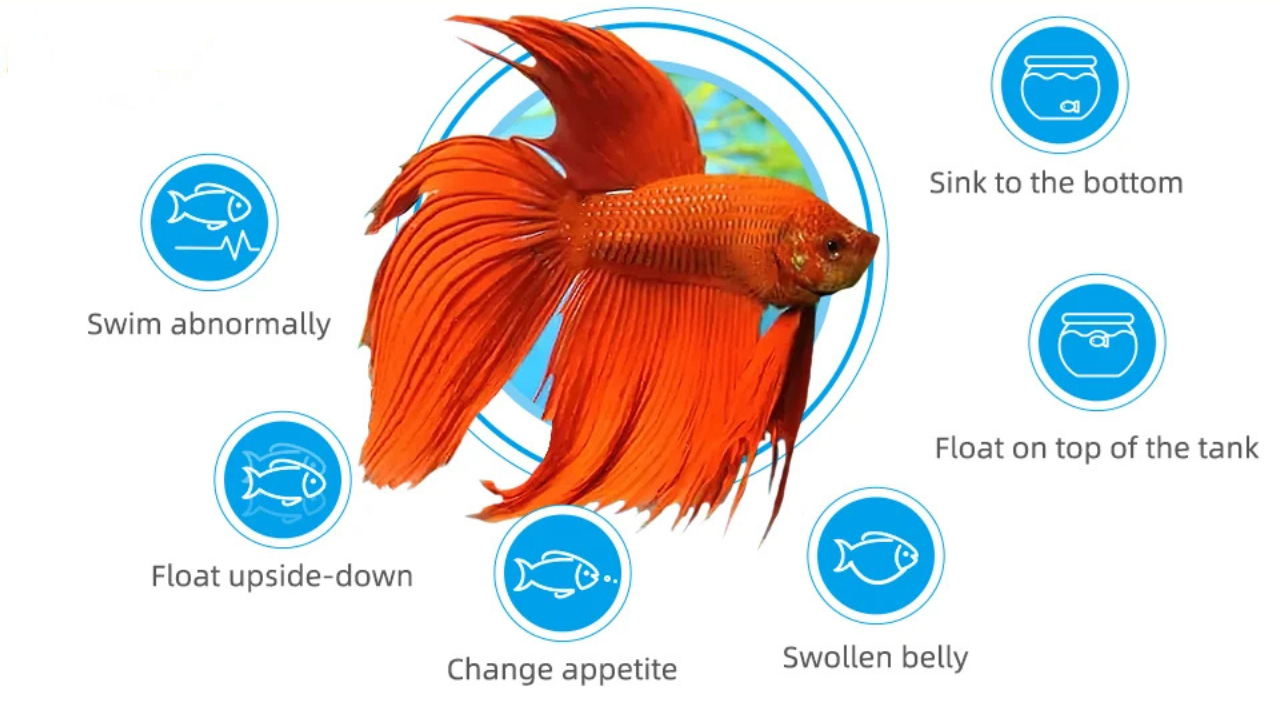
Recognizing the signs of swim bladder disease early gives your betta the best chance of recovery. Common symptoms include:
- Plunge to the depths and could not kick up
- Floating laterally, inverted or tilted
- Struggling to stay upright
- Sleepiness and loss of activity
- A visibly bloated belly
- Loss of interest in food.
All these signs are connected with the issues of buoyancy. Where the healthy betta will float along the water, with perfect grace and facility, diseased fishes will be clumsy and inconvenienced.
What Causes Swim Bladder Disease in Bettas?
Swim bladder issues with the bettas are caused by varied factors, most of which are associated with the feeding habits, water quality, or stress. These causes will be understood, which will assist you in not only treating but also preventing future problems.
1. Overeating and Gastrointestinal Obstruction
Overfeeding is one of the most popular reasons why bettas get the swim bladder disease. The digestive tract may get stuck when the betta eats too much or food that swells up in the gut (such as dry pellets that were not pre-soaked). The pressure on the swim bladder causes problems of buoyancy.
2. Shabby Water Quality or Rapid Fluctuation
Sewage water, hot ammonia or nitrates, and extreme changes in temperature all cause stress to the fish and interfere with normal body functionality. The quality of water influences digestion and metabolism, and in case of poor conditions, it may contribute to the problems with a swim bladder.
3. Stress or Physical Trauma or Infection
Symptoms of the swim bladder may occur because of stress issues in the form of poor tank environment, violent tank mates, or unintentional injury. In others, secondary swim bladder dysfunction is caused because of the bacterial or parasitic infections of internal organs.
4. Genetic or Developmental Problems
There are also some bettas that can be genetically inclined towards having a deformed swim bladder, or can have problems earlier in life. Although uncommon, genetics can contribute to it unlike dietary and environmental causes.
Read Also: Factile Review 2025: Pricing, Use Cases, and Expert Tips
Treatment Options for Swim Bladder Disease Betta
As soon as you imagine that your betta has the swim bladder disease, it is high time to take steps that will give you the best chances of curing it. The following is a step-by-step approach to simple common treatment that is highly effective:
1. Correct Feeding Practices
- Fast your fish for 1–3 days. This aids to remove any obstruction in the digestive tract and minimizes pressure on the swim bladder.
- Wet dry food down the gastrointestinal tract so it does not expand, and feed little and less often.
2. Improve Water Conditions
Water is needed to be clean and stable. Change part of the water frequently and ensure that the quantities of our water (ammonia and nitrate) are maintained in normal proportions. Slowly raise or lower water temperature to an appropriate level (approximately 78 to 80 °F or 25 to 27 °C) as hotter water may help in digestion.
3. Use a Hospital/Hospital Tank
In case the problem appears acute, install a smaller and clean tank that has shallow water, constant conditions and low flow. This provides the betta with a calm atmosphere in which it is able to swim with less effort and recuperate a lot easier.
4. Medications for Infections
In case you think it is a bacterial or parasitic infection, then you might need a certain medicine for it e.g. antibiotic or anti-parasite. They must be used only when specifically mentioned, and product advice or Vet advice should be followed.
Is Swim Bladder Disease Fatal?
Swim bladder disease may be severe, yet it hardly causes death when treated in time and properly. The majority of the bettas are very receptive to treatment, particularly where the cause is related to diet or water quality. Nevertheless, the consequences are different at varying severities based on the causal issue. Quick treatment and good care will provide the greatest possibility of survival to you betta.
Final Word
The cases of the swim bladder disease in betta can readily occur among the aquarium hobbyists, yet given the appropriate knowledge and intervention, your betta can still survive and flourish. Being aware of the symptoms, combating their probable causes, including overfeeding and poor water conditions and taking due care measures in handling them can help it all. Swim bladder problems can be kept to the minimum with the help of the constant check-ups and attentive care so that your colorful fish may have a comfortable and healthy life.
Read More: Betta Fish Tank: The Essential Guide to a Thriving Betta Home